18.05.2026
How Waste Tires Are Recycled – From Waste to a New Resource
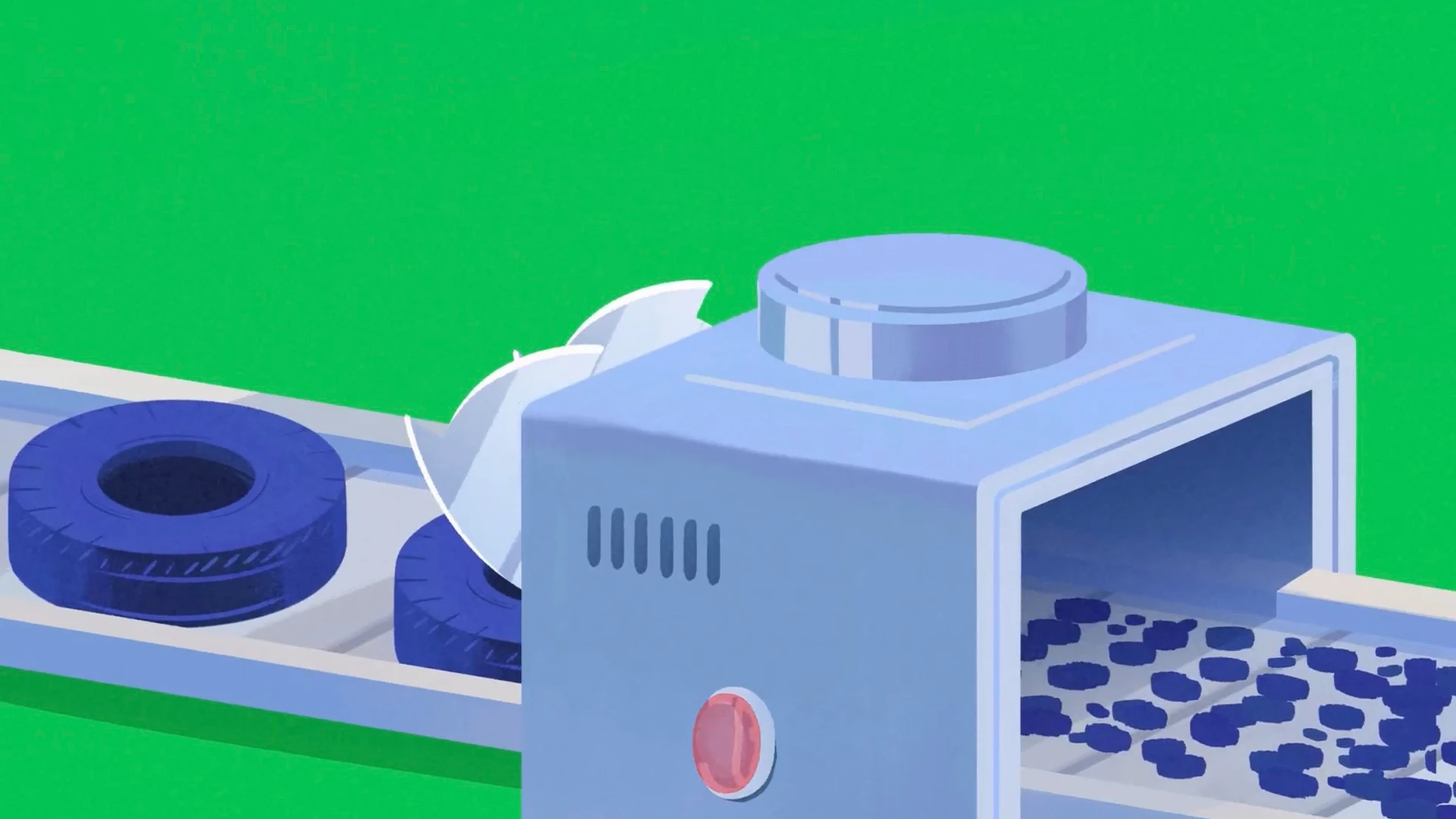
As the number of vehicles continues to grow worldwide, the issue of managing used tires is becoming increasingly important. Every year, thousands of tires reach the end of their lifecycle and turn into waste. If improperly disposed of, they create serious environmental risks - from soil and water pollution to fire hazards and the release of toxic substances.
That is why tire recycling has become one of the key directions of the modern circular economy. During the recycling process, old tires are no longer considered useless waste - they become a valuable resource that can be reused in various industries.
Why Is Tire Recycling Important?
Tires are complex products made of rubber, metal, textile materials, and various chemical components that decompose extremely slowly in nature. In fact, a single tire may take hundreds of years to fully break down.
If used tires are stored improperly or end up in the environment, they can:
- increase the risk of soil and water contamination;
- release toxic substances;
- create fire hazards;
- become breeding grounds for insects and rodents.
For this reason, proper collection and recycling of tires is an essential part of environmental protection.
How Does the Tire Recycling Process Work?
The recycling of waste tires consists of several stages. Each stage aims to separate valuable materials from the tire and prepare them for reuse.
1. Collection and Sorting
At the first stage, used tires are collected from auto service centers, tire shops, and other facilities. They are then sorted according to size, type, and condition.
Some tires may still be suitable for reuse or retreading, while others are sent for recycling.
2. Shredding
Next, the tires are cut into smaller pieces using specialized machinery. This process simplifies further recycling and helps separate different components.
3. Material Separation
The shredded tire is divided into several main materials:
- rubber;
- metal;
- textile fibers.
Using specialized technologies, metal parts are separated through magnetic systems, while textiles are removed using air-flow or filtration methods.
4. Production of Rubber Granules
The recycled rubber is then processed into granules or powder of various sizes, which can be used in many industries.
Where Are Recycled Tires Used?
Materials obtained from recycled tires are used in various fields, including:
- sports and playground surfaces;
- asphalt and road infrastructure;
- shoe soles;
- construction materials;
- industrial flooring;
- sports tracks;
- protective and insulation materials.
In addition, some technologies make it possible to generate energy from waste tires.
Circular Economy and Responsible Management
Recycling waste tires is not only about environmental protection - it is also part of efficient resource management and the circular economy. When an old product becomes a source of new materials, waste is reduced and pressure on natural resources decreases.
More and more countries around the world are developing modern tire management systems that include collection, recycling, and the reuse of secondary materials.
The Future Lies in Greener Approaches
Caring for the environment begins with responsible decisions. Proper management and recycling of used tires is an important step toward a cleaner and more sustainable future.
Every recycled tire means:
- less waste in the environment;
- less pollution;
- more secondary resources;
- and a greener economy.
That is why tire recycling is considered one of the essential processes of modern environmental management.