17.08.2026
Illegal Waste Market - A Problem That Extends Beyond the Environment
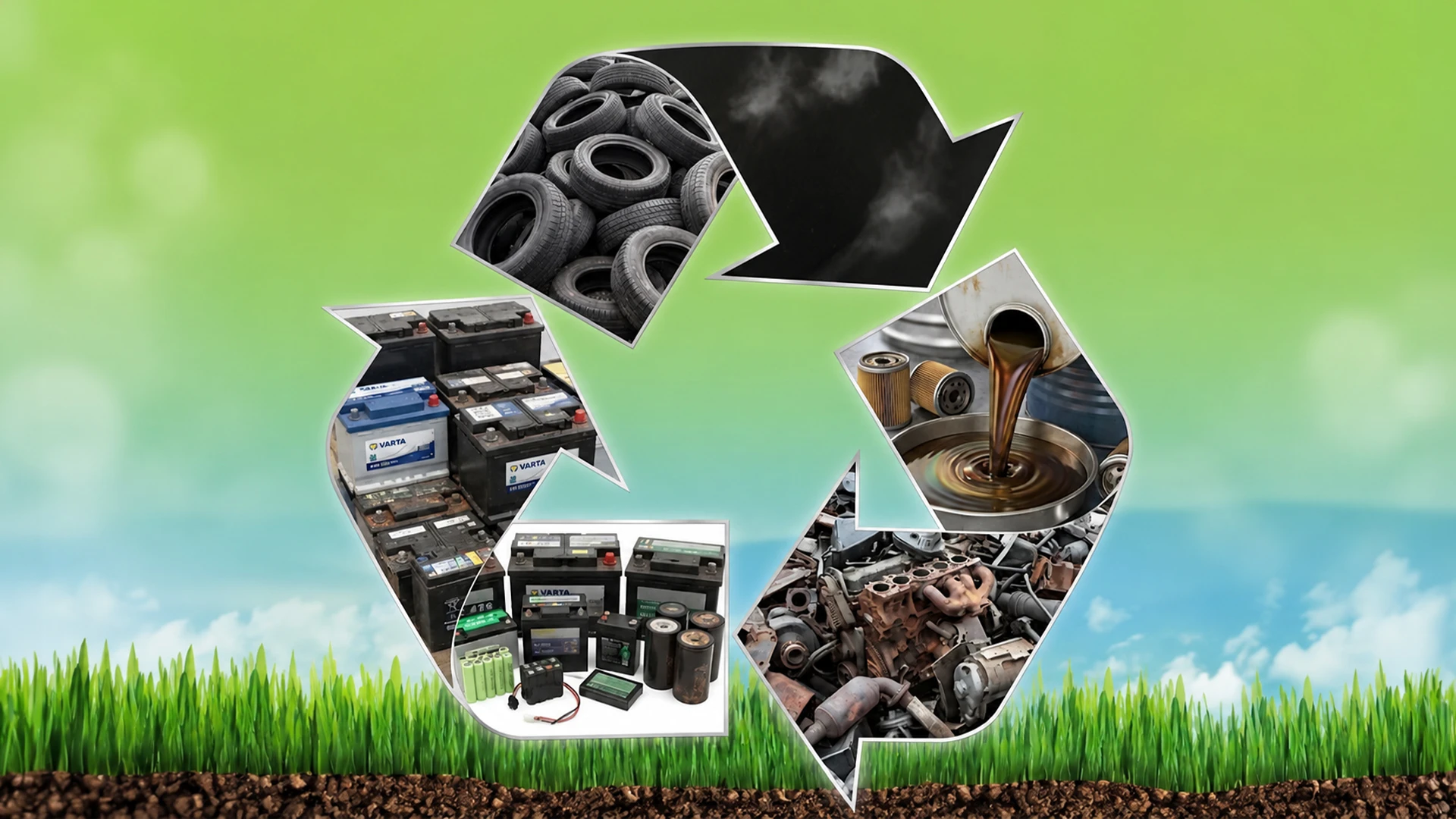
When discussing waste management, attention often focuses on how much waste has been collected and how much has been recycled. However, the process itself is equally important: who collects the waste, how it is transported, where it is stored, and, ultimately, what happens to it before it reaches recycling.
Particular attention should be paid to cases where used tyres, waste oils, or accumulators enter an illegal market instead of being managed through the legal system. At first glance, this may appear to be simply a waste management issue. In reality, the problem is much broader. Such practices can harm the environment, reduce transparency in waste management, and create unfair conditions for organizations that operate in accordance with legislation and established standards.
What Does It Mean for Waste to Enter the Illegal Market?
Waste - particularly tyres, waste oils, and accumulators - has a certain economic value. This is why collecting and subsequently reselling it can become part of various informal activities.
The problem begins when waste is collected, transported, or stored without the appropriate registration or permits, or when its final destination is unknown.
In such cases, the movement of waste remains outside effective control. There may be no reliable information about where it is stored, how it is processed, or whether it is recycled at all. As a result, waste that could become a resource if properly managed can instead become a threat to the environment.
Georgian legislation establishes specific requirements for activities related to waste management. The introduction of the EPR system has created an additional framework for managing specific waste streams, including tyres, waste oils, and accumulators.
Why Is This a Problem for Legal Organizations?
Waste management is not simply about moving waste from one place to another.
An organization operating in compliance with legislation needs appropriate infrastructure, transportation, human resources, tracking systems, safety measures, and partnerships with recycling facilities. All of this involves significant costs.
In the illegal market, waste can be collected at a much lower cost, without the same infrastructure, documentation, or compliance with environmental requirements.
This creates an uneven competitive environment. A legal organization that takes responsibility at every stage is forced to compete with activities that do not carry the same obligations or costs.
Ultimately, the issue is no longer limited to competition between individual companies. If illegal practices expand, they can undermine the development of the waste management system as a whole.
When the Fate of Waste Is Unknown
One of the most significant problems associated with the illegal market is that the final destination of waste often remains unknown.
Used tyres are one example. Improper management can mean abandoning them in the environment, storing them in unsuitable conditions, or burning them. Open burning of tyres is particularly problematic, as it can release substances that are harmful to the environment and human health.
That is why it is important not to consider a tyre a “removed waste” immediately after collection. Its management is complete only when we know where and how it was subsequently processed.
Tegeta Green Planet collects used tyres across Georgia, with their subsequent management carried out through partner recycling facilities. This approach makes it possible to monitor the waste journey and ensure that it is managed in accordance with established requirements.
EPR - Responsibility Beyond the Point of Sale
The main idea behind Extended Producer Responsibility, or EPR, is simple: responsibility for a product should not end when it is sold.
The waste generated after a product is used is also part of the system and should be managed in a way that minimizes environmental impact and makes it possible to recover and reuse the resources contained in that waste.
Georgia’s EPR system is based on this principle. Specific requirements and obligations have been established for the management of tyres, waste oils, accumulators, and other relevant waste streams.
Tegeta Green Planet has been operating since 2022 as an authorized EPR organization. Its activities include the management of waste tyres, waste oils, and accumulators.
This means that collection is only one stage of the process. The ultimate goal is to ensure proper management and, eventually, recycling.
What Changes When Waste Remains Within the Legal System?
One of the main advantages of the legal system is a controlled and traceable process.
The amount of used tyre waste collected by Tegeta Green Planet has increased significantly in recent years. In 2023, the organization collected 2,862 tonnes of waste tyres; in 2024 - 3,915 tonnes; in 2025 - 4,640 tonnes; and by June 2026, it had collected 1,558 tonnes.
Behind these figures lies more than just quantity. Every tonne represents tyres that entered an appropriate waste management system and therefore have the potential to be recycled.
Once recycled, tyres are no longer simply waste. The materials recovered from them can be used for various purposes and contribute to the creation of new products and infrastructure.
Why Are Business and Consumer Engagement Important?
The effective functioning of the waste management system cannot be the sole responsibility of the state and waste management organizations.
For businesses, it is important to know who they are handing their waste over to and what happens to it afterwards. For consumers, it is equally important to know where they can hand in used tyres, accumulators, and other types of waste.
Making the right choice means using a system where the waste journey is as transparent as possible and its subsequent management is carried out in compliance with relevant requirements.
This is particularly important for businesses, because responsible waste management is no longer simply a legal obligation. It is also an important part of a company’s environmental responsibility and sustainable operations.
Supporting the Legal Market Is in Everyone’s Interest
The development of the waste management sector requires an environment in which legally operating organizations have the opportunity to compete on equal terms.
When one organization invests in infrastructure, logistics, employee safety, tracking systems, and compliance with relevant standards, while another collects the same waste without meeting these requirements, the consequences extend beyond individual businesses.
In the long term, this affects how effectively the waste management system as a whole can operate.
One of Tegeta Green Planet’s key areas of activity is contributing to the development of this system - ensuring the responsible management of used tyres, waste oils, and accumulators, while creating opportunities to return these materials to the resource cycle.