30.03.2026
GRAS 2026 – An international conference organized by Tegeta Green Planet and Wasteless
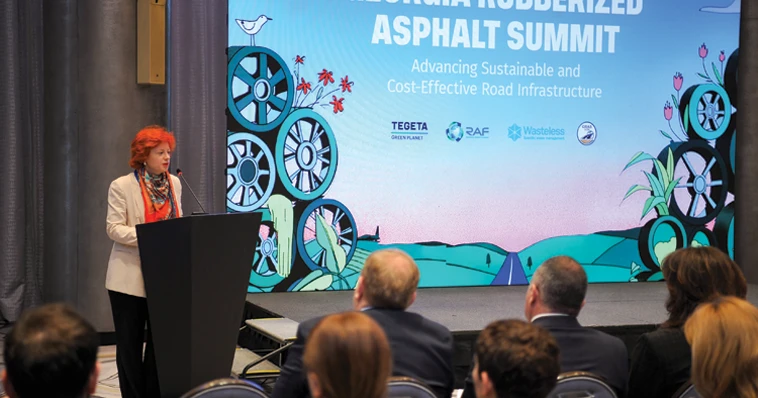
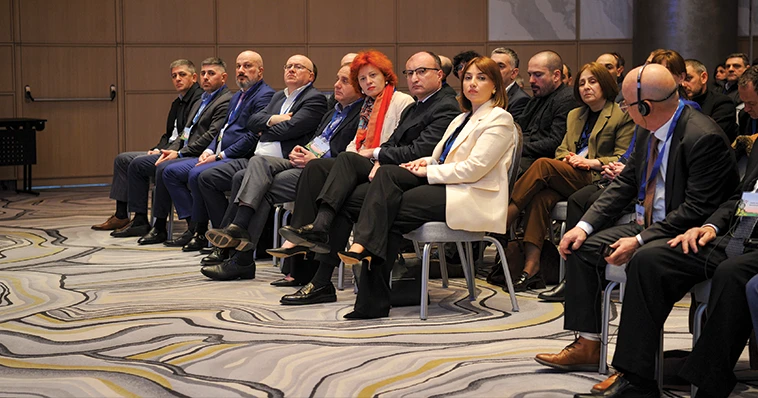
Another Step Toward Sustainable Infrastructure – The international conference “Georgian Rubber-Modified Asphalt Summit 2026” (GRAS 2026) was organized in Tbilisi by Tegeta Green Planet and the Wasteless Association for Specific Waste Management. The event aimed to facilitate the exchange of global expertise in the development of sustainable road infrastructure and rubber-modified asphalt technologies.
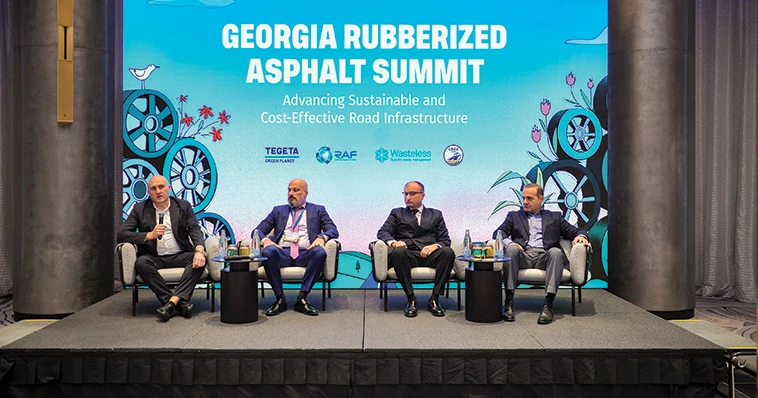
During the conference, international experts and industry leaders discussed global challenges and opportunities currently existing in this field. Part of the conference was dedicated to a panel discussion.
Ekaterina Kavtaradze, CEO of Tegeta Holding: “For Tegeta Holding, sustainable development is one of the most important principles of our operations, which is reflected in concrete solutions. I am delighted that Georgia has had the opportunity to host such a large-scale event. GRAS 2026 demonstrates that the circular economy can become a real economic priority in Georgia as well, bringing significant benefits to the country, as waste is transformed into a resource, creating economic advantages and reducing the negative impact on the environment.”
Such discussions contribute to the adoption of international best practices in this area, the development of new standards, and the long-term sustainability of road infrastructure. We believe that Georgia must keep pace with modern technologies so that, together, we can build a greener future.
Rubber-modified asphalt, popular in the U.S., Portugal, Spain, and other European countries for over 60 years, is still not used in Georgia. This technology is much more durable than conventional asphalt—its service life is 8–10 years—it reduces noise levels and better withstands the effects of water, while also significantly reducing environmental pollution from automotive waste.
Shalva Akhvlediani, Director of Tegeta Green Planet: “Georgia is at a stage where infrastructure decisions can shape the economic and environmental outcomes of the next generation.” This summit provides us with a unique opportunity to learn from the world’s leading countries and implement these lessons at the local level. Overall, the circular economy is the way forward: it allows us to transform waste, such as used tires, into a useful resource, ensuring economic stability, environmental protection, and sustainable development.”
The goal of the organizers of GRAS 2026 is to ensure proper waste management in Georgia and to raise public awareness, particularly regarding the harm that unprocessed waste causes to the environment.
Giorgi Guliashvili, Chairman of Wasteless: “Our goal is to implement a fully circular model in Georgia—from waste collection to recycling and the effective use of recycled materials. Starting this autumnl, Georgia will launch its first high-tech tire recycling plant, which will process used tires collected throughout the country. Using recycled rubber in asphalt is a clear answer to the question of how the resulting raw materials are utilized. As a result of the plant’s launch, we estimate that we will produce up to 12–15 thousand tons of rubber crumb per year, which will allow us to use this material locally to build more durable and environmentally friendly roads. This will bring significant benefits to both the environment and the economy.”
The international summit is not only a platform for knowledge exchange but also a call to action, highlighting that Georgia has the opportunity to become a regional leader in the development of sustainable infrastructure, enabling the country’s economy to enter a new phase through the implementation of “green” initiatives and innovative approaches.
The international summit is not only a platform for knowledge exchange but also a call to action, highlighting that Georgia has the opportunity to become a regional leader in the development of sustainable infrastructure, enabling the country’s economy to enter a new phase through the implementation of “green” initiatives and innovative approaches.
“Tegeta Green Planet” is a subsidiary of “Tegeta Holding” and has been operating since 2022. It was one of the first companies in Georgia to receive authorization from the Ministry of Environment and Agriculture to recycle used tires, oils, and batteries under the extended producer responsibility framework. In the first stage, the organization collects specific types of waste in accordance with regulations, ensures their transportation and recycling, and then manages them in accordance with the principles of the circular economy.