23.07.2026
University of Georgia Students Present Bachelor’s Thesis on Tegeta Motors’ Green Initiatives and Sustainable Development in the Automotive Industry
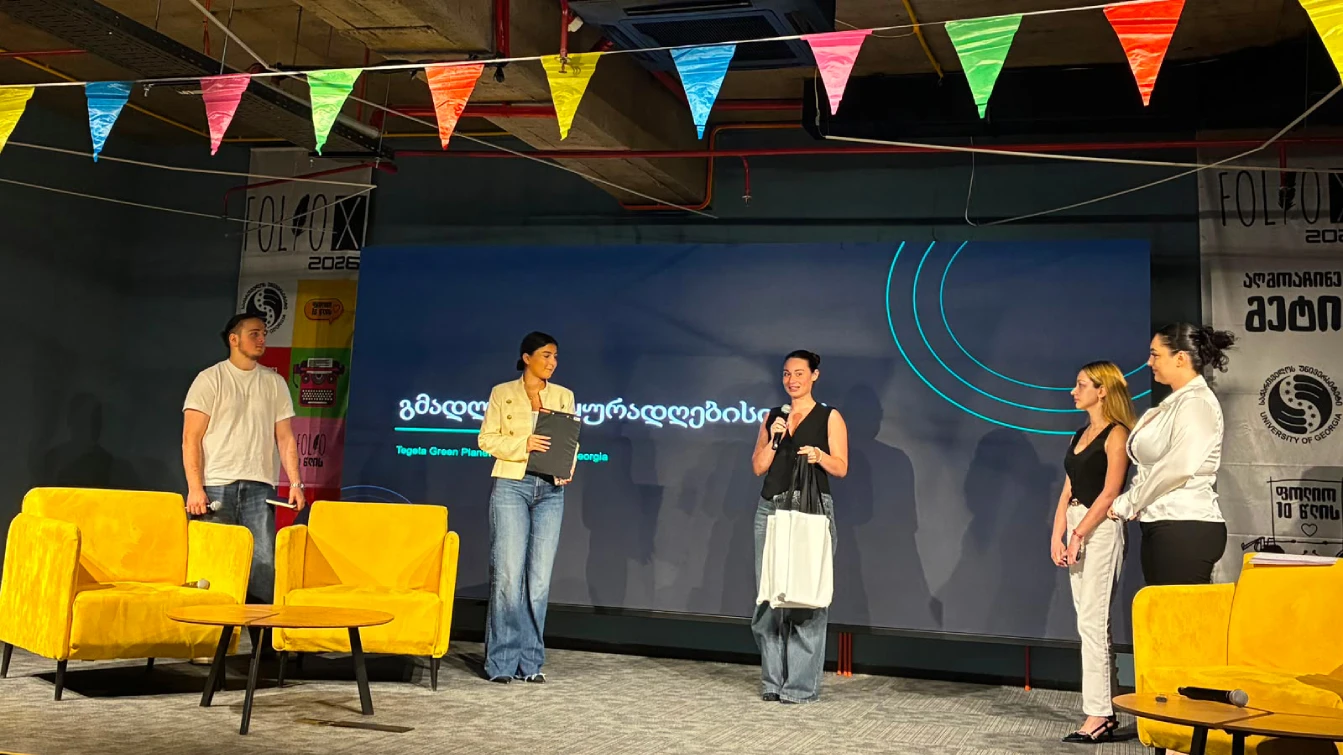
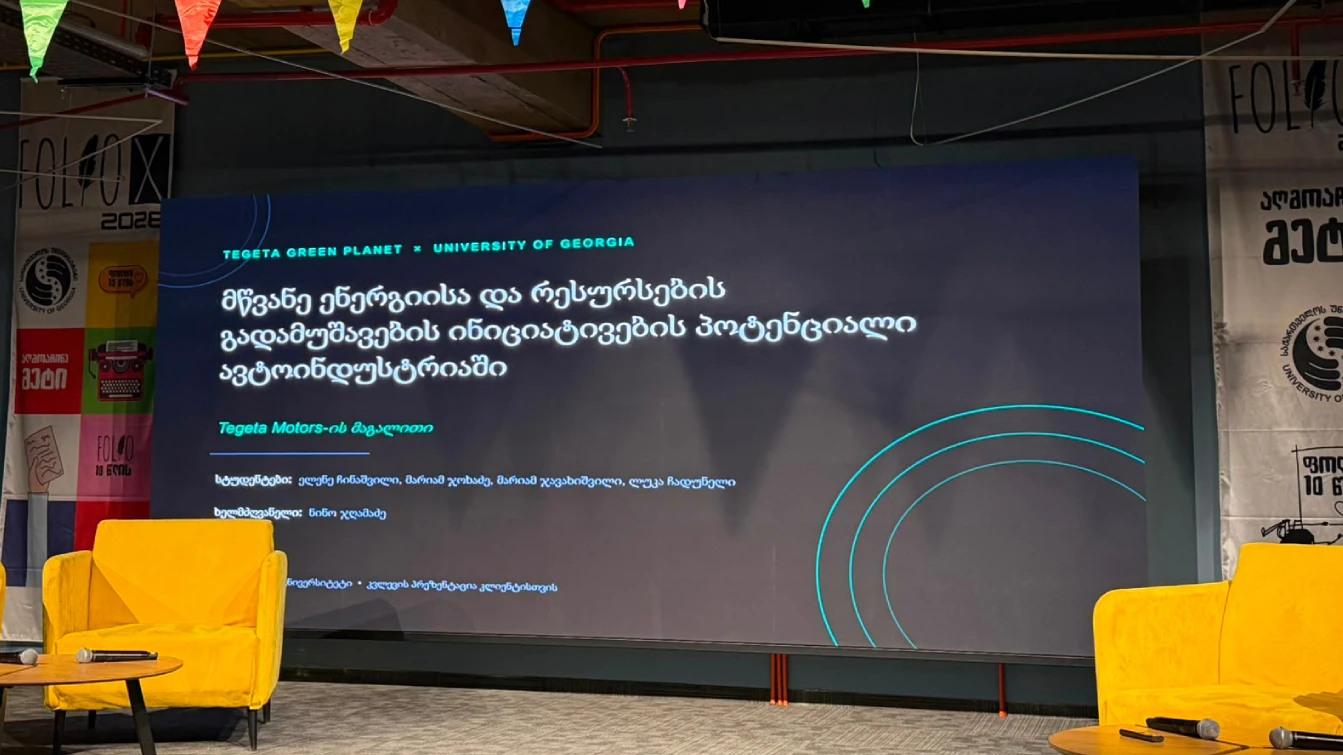
As part of the University of Georgia’s bachelor’s thesis defense sessions, one student group selected "The Potential of Green Energy and Resource Recycling Initiatives in the Automotive Industry" as the subject of its research. Given the relevance of the topic, the presentation was attended by representatives of Tegeta Green Planet and the company’s Director, Shalva Akhvlediani.
The thesis explored the importance of sustainable development in the modern automotive industry, the implementation of circular economy principles, and approaches to reducing environmental impact. The students paid particular attention to Tegeta Motors’ role in the development of Georgia’s automotive sector, highlighting the company’s modern infrastructure and initiatives that promote the efficient use of resources and the responsible management of specific waste streams.
During the presentation, the students discussed how the private sector contributes to the development of the Extended Producer Responsibility (EPR) system, the implementation of modern waste management practices, and the promotion of circular economy principles. They also addressed the challenges and opportunities associated with Georgia’s ongoing green transition.
Following the presentation, a discussion was held during which representatives of Tegeta Green Planet highly praised the students’ research and emphasized that cooperation between businesses and academia plays a vital role in generating new ideas and practical solutions for sustainable development.
Shalva Akhvlediani, Director of Tegeta Green Planet, noted the growing interest of young people in environmental issues:
"We are pleased to see young people taking an interest in topics such as the circular economy, resource recycling, and opportunities for sustainable development in the automotive industry. Education and knowledge sharing are the foundation for fostering more responsible business practices and strengthening environmental awareness in the future."
Tegeta Green Planet actively collaborates with educational institutions and considers raising environmental awareness among young people one of its key priorities. The company regularly organizes meetings at schools and universities, where students learn about the Extended Producer Responsibility (EPR) system, the principles of the circular economy, and the importance of the proper management of specific waste streams, including used tyres, waste oils, and batteries.
The bachelor’s thesis defense at the University of Georgia once again demonstrated that sustainable development and the green transition have become important areas of interest not only for businesses but also for the academic community. Such cooperation helps bridge the gap between knowledge and practical experience, ultimately contributing to more effective environmental solutions and the development of a more responsible society.